Most jazz students begin improvisation the same way: a blues scale, followed by a modal tune like Miles Davis’ “So What.”
From there, they’re often introduced to chord–scale relationships through method books and play-along recordings. The information is correct—but something essential is usually missing.
This workshop begins where those materials tend to stop. Rather than asking students to navigate harmony abstractly, it asks a more fundamental question: how do real jazz musicians construct lines that sound intentional, grounded, and alive?
What comes after scales?
And what, beyond theory, actually leads to vocabulary?
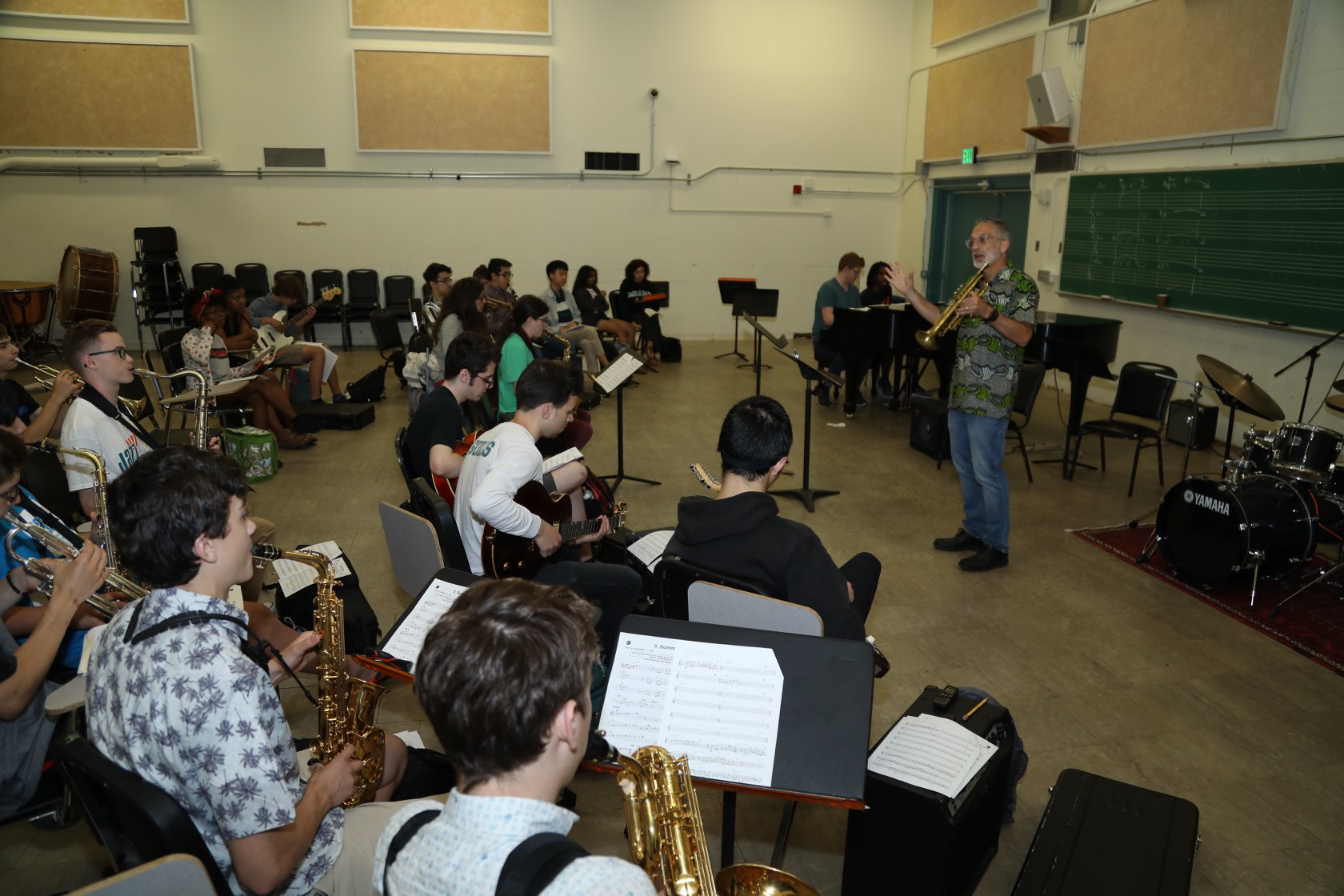
In this session, I focus on identifying and internalizing the language of the music itself. Using recorded examples and selected transcriptions, we isolate fragments of vocabulary drawn from working jazz musicians—not exercises, but sentences. I demonstrate practical ways to extract, practice, and assimilate this material so it becomes part of a student’s own improvisational voice.
The emphasis throughout is on listening, lineage, and intention—moving beyond harmonic compliance toward musical thought.