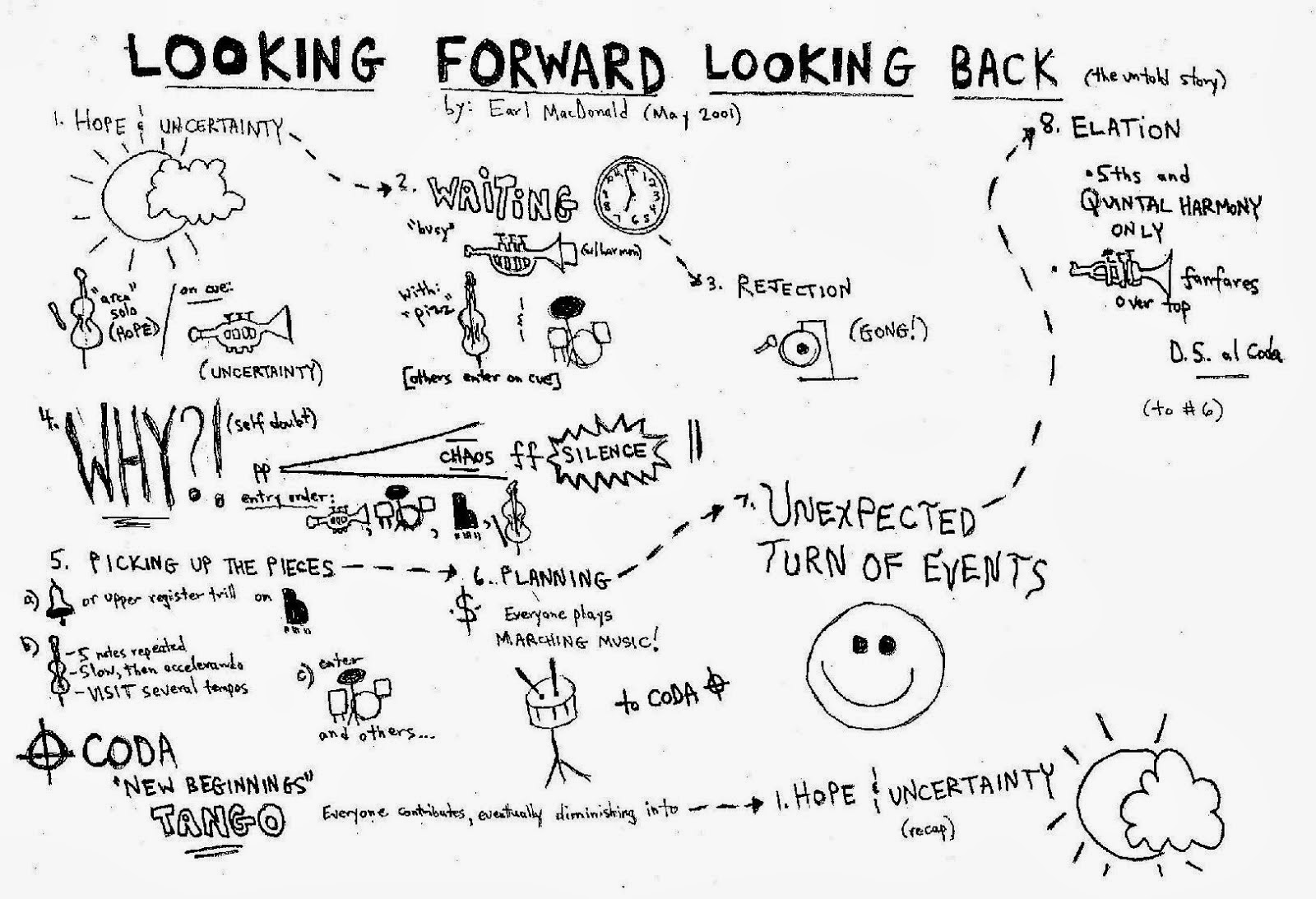
Guided “free” improvisation—using structured games and graphically notated scores—offers a direct way into improvisation without asking students to solve harmonic problems before they can listen, respond, and create. Rather than beginning with chords and scales, this approach foregrounds contrast, interaction, and musical decision-making.
The emphasis is not freedom as absence of structure, but freedom within clearly defined constraints. Students are invited to work with sound, time, density, register, and form—developing intuition alongside awareness.
Session title: Footloose & Fancy-Free
This workshop grew out of a practical need: getting young musicians actively improvising on day one, often before they had any shared technical or theoretical vocabulary. Structured games and graphic scores made that possible—without paralysis, without apology.
I do not present this work as a replacement for theory or jazz history, but as a parallel path. When students are freed from immediate harmonic correctness, they listen more closely. They take risks. They begin to trust their musical instincts.
I’ve used the same materials with advanced students and professional musicians, both in classrooms and onstage. In each context, the result is the same: heightened attention, sharper interaction, and a meaningful contrast within a larger musical setting.