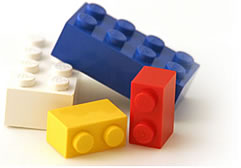
In this workshop, I use a simple analogy to address a persistent improvisational problem: students trying to build entire solos without workable units. Like constructing with LEGO bricks, improvisation becomes far more coherent when musicians are given elements of varying size and function—pieces that can be combined, reordered, and developed in real time.
We work with small, concrete materials—seconds, thirds, triads, and seventh chords—not as theory exercises, but as flexible building blocks. These units are easy to manipulate, encourage play, and naturally lead to phrases with shape and internal logic.
The goal is not complexity, but coherence. By limiting the available materials, students gain clarity, confidence, and a stronger sense of form—learning how structure can emerge from restraint rather than excess.