Composition I & III – Course Syllabus
Course Overview
This course is designed for developing composers who wish to move beyond theory and into intentional, personal musical authorship. Rather than treating composition as a purely academic or technical exercise, we will approach it as a practical, creative craft: shaping form, melody, harmony, rhythm, texture, and orchestration into music that communicates clearly and compellingly.
Students will compose regularly, revise critically, listen deeply, and reflect thoughtfully. Central to the course is an engagement with the lineage of 20th- and 21st-century composers, not as models to imitate uncritically, but as sources of strategies, questions, and possibilities. The goal is informed choice—understanding how and why composers made particular decisions, and applying those insights to one’s own creative work.
Compositions will be treated as living documents: sketched, tested, revised, and refined through discussion, rehearsal, and performance whenever possible. The course assumes curiosity, discipline, and a willingness to experiment, take risks, and work through uncertainty.
Course #: MUSI 3331, 4333 Credits: 3
Semester: Fall 2019
Instructor: Earl MacDonald, Professor of Music
Class Meeting Time: Tuesdays & Thursdays, 11:00 a.m. – 12:30 p.m.
Office: MUSB 207
Office Hours: Wednesdays, 10:10 – 11:00 a.m.; Thursdays, 12:30 – 1:20 p.m., and by appointment
Lesson Appointment Times:
Tuesdays: 11:00 AM – Abby, 11:30 AM – Claire, 12:00 PM – Dean
Thursdays: 11:00 AM – Michael, 11:30 AM – Ian
Music Composition Assignments
- Approximately five chamber works (4–5 minutes each) will be composed over the course of the semester, or the equivalent thereof.
- For the purposes of this course, “chamber works” are defined broadly as art music composed for one to twelve musicians, with one performer per part. Solo and duo works are permitted; however, no more than one solo work may be submitted.
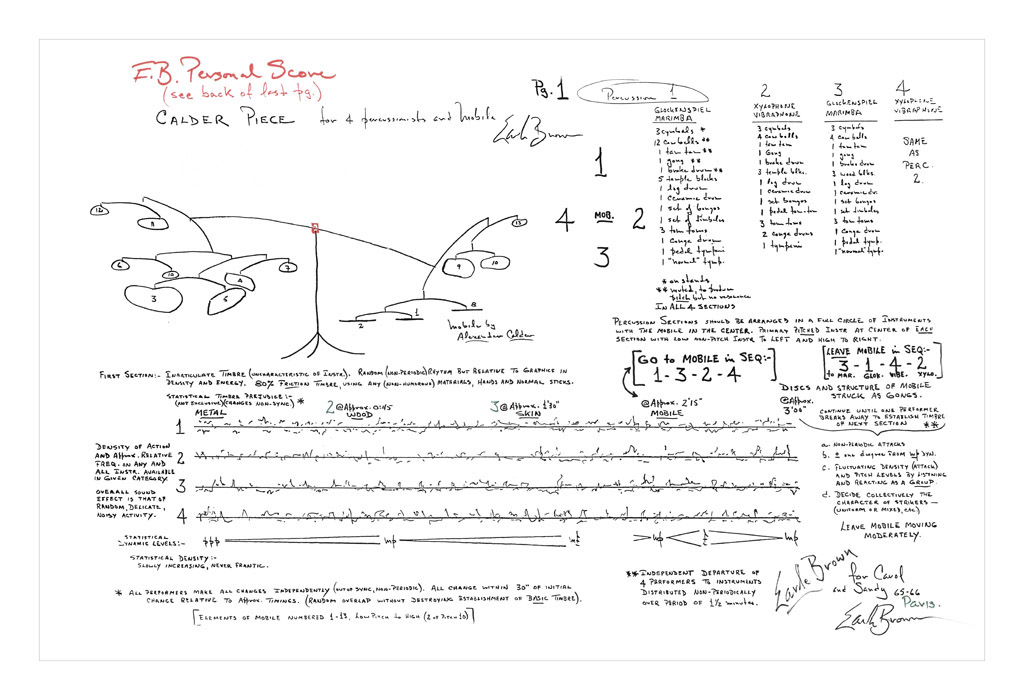
- One composition must incorporate graphic notation, either in whole or in part.
- Short, song-form jazz compositions may be submitted. Due to their function as vehicles for improvisation and their typically limited pre-composed development, three short jazz songs will be considered equivalent to one chamber work.
- Completed works must be prepared using notation software (Finale, Sibelius, Dorico, or equivalent), with the exception of graphically notated scores. Composing initially with pencil and paper is strongly encouraged.
- Listening Journals
Listening is treated in this course as compositional research. Students will maintain a listening journal designed to expand creative resources, sharpen perception, and cultivate compositional awareness.
Listening & Reflective Practice
Each week, students will select one substantial work or album from the provided listening list (or another work approved by the instructor), prioritizing composers and styles with which they are least familiar. Listening should be focused and intentional—ideally repeated, uninterrupted, and attentive.
Journal entries need not be lengthy, but they should be thoughtful and specific. In addition to general impressions, students are encouraged to address:
- Instrumentation and orchestration choices
- Formal design and large-scale structure
- Harmonic language and pacing
- Motivic development
- Texture, density, and register
- Dramatic or expressive moments and how they are achieved
- Ideas, techniques, or approaches worth borrowing, adapting, or questioning
The emphasis is not on summary, but on extraction—identifying compositional tools and strategies that may inform one’s own work.
Grading
- Compositional Output – 70%
- Five completed chamber works (or equivalent) account for the majority of the final grade. Each work is valued at 14%.
- Quality will be assessed according to:
- Adherence to stated parameters and stylistic intent
- Idiomatic and playable writing for instruments
- Clarity and precision of notation
- Evidence of revision, refinement, and problem-solving
Approximate submission windows:
- Sept. 17 / 19
- Oct. 1 / 3
- Oct. 15 / 17
- Oct. 29 / 31
- Nov. 19 / 21
- Listening Journals – 20%
- Minimum of 12 entries by semester’s end
- Entries will be discussed periodically during lessons
- Journal submitted during the final week of classes
- Weekly Work & Engagement – 10%
- Assessed based on consistent effort and progress, including sketches, drafts, planning materials, and reflective work.
There is no formal midterm or final exam for this course.
Grading Scale:
A: 94–100 A-: 90–93 B+: 86–89 B: 82–85 B-: 78–81
C+: 74–77 C: 70–73 C-: 66–69 D+: 62–65 D: 58–61
D-: 51–57 F: 0–50
Music Composition Listening List
The following composers and works represent a broad range of approaches to form, texture, notation, and musical thought. Students are encouraged to approach this list with openness and curiosity, particularly toward works that initially feel unfamiliar or challenging.
Earle Brown:
-
- December 1952
- Available Forms I & II
- Centering
- Cross Sections
- Color Fields
Witold Lutoslawski:
-
- Cello Concerto
- Livre pour Orchestra
- Symphonies 2, 3, & 4
- Prelude and Fugue for 13 Solo Strings
György Ligeti:
-
- Aventures
- Double Concerto
- Piano Concerto
- Cello Concerto
- Hamburg Concerto
- Chamber Concerto
- Lontano
- Violin Concerto
Morton Feldman:
-
- Coptic Light
- Oboe and Orchestra
- Flute and Orchestra
- Piano and Orchestra
- Cello and Orchestra
- For Samuel Beckett
Arvo Pärt:
-
- Coro
- Tabula Rasa
- De Profundis
- Cantus in Memoriam Benjamin Britten and Tabula Rasa
Luciano Berio:
-
- Laborintus I and II
- Points on the Curve to Find
- Sequenzas (orchestrated)
- Concerto for two pianos and orchestra
- Linea
- Coro
Anton Webern:
-
- Symphony, Opus 21
- String Trio
- Six Bagatelles for string quartet
- Concerto for Nine Instruments
Alban Berg:
-
- Violin Concerto
- Wozzeck
- Lyric Suite
- Lulu
Arnold Schoenberg:
-
- Five Pieces for Orchestra
- Violin Concerto
- Piano Concerto
- piano music
Elliott Carter:
-
- String Quartets 1,2, & 3
- Triple Duo
- Piano Concerto
Karlheinz Stockhausen:
-
- Gruppen
- Punkte
Béla Bartók:
-
- string quartets
Hans Werner Henze:
-
- Tristan
- Palestrina
*The course content, schedule and grading scheme are subject to change at the instructor’s discretion. Note: This online syllabus/class schedule is a malleable, evolving, and frequently updated document. Check it frequently.
Communication policy
E-mail is the instructor’s preferred method of communication with students. Please allow 48-hours for replies. When requesting a meeting with me outside of my office hours, please submit several meeting time options. I prefer to be addressed as Professor MacDonald.
Academic and Conduct Policies for Students
⇒ https://provost.uconn.edu/syllabi-references/
This page provides students with centralized access to policies related to academic integrity, conduct, discrimination and harassment, attendance, and accommodations, offering clarity on the standards that shape their classroom experience.
Some useful telephone numbers:
- Counseling and Mental Health Services: 860-486-4705 (after hours: 860-486-3427) www.cmhs.uconn.edu
- National Suicide Prevention Lifeline: http://suicidepreventionlifeline.org/ Dial 988.
- Alcohol and Other Drug Services: 860-486-9431 www.aod.uconn.edu
- Dean of Students Office: 860-486-3426 https://dos.uconn.edu/
- Career Services: 860-486-3013 www.career.uconn.edu
- Center for Students with Disabilities: 860-468-2020 http://csd.uconn.edu/