What is the protocol for kids who want to “sit it” with some local groups?
On preparation, context, and respect
Sitting in can be a meaningful step in a young musician’s development—or a discouraging one. The difference is rarely talent. More often, it’s preparation, timing, and an understanding of context.
Jazz spaces, like all musical subcultures, operate with shared assumptions that are not always made explicit. When those assumptions are ignored, the result can feel abrupt or even hostile. The goal, especially for students, is not to test courage in public, but to learn how musical communities actually function.
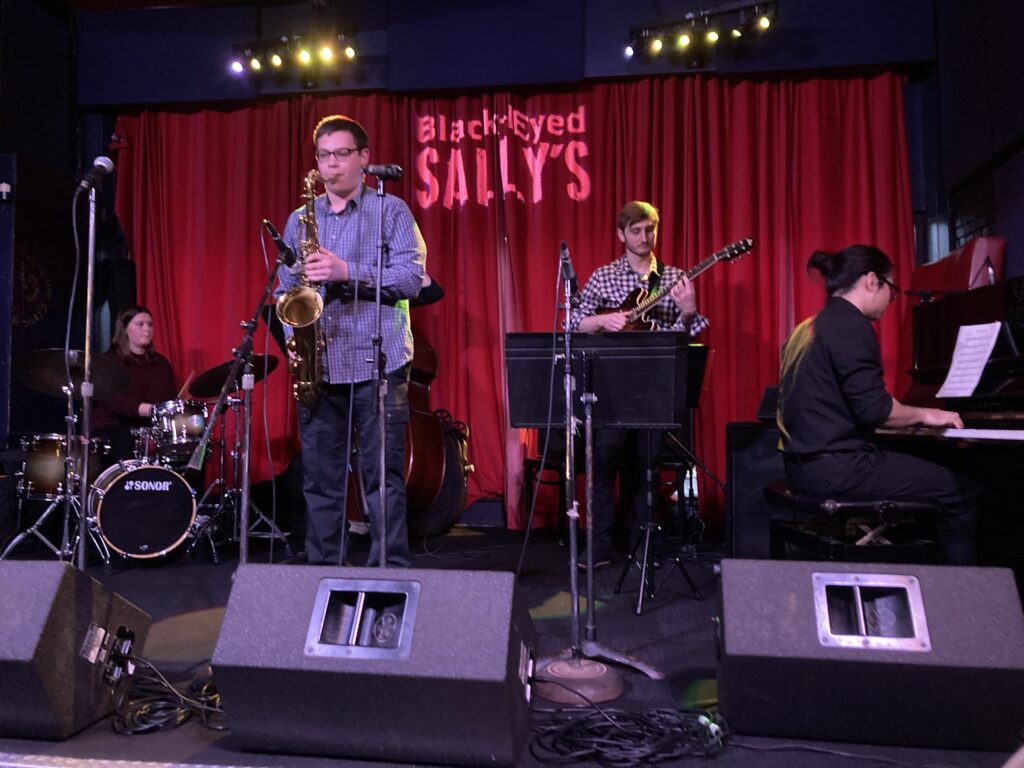 If a student is interested in sitting in at a local jam session, the first step should be observation. Encourage them to attend once or twice without playing. Listen to how tunes are called, how tempos are established, how musicians enter and exit the bandstand, and how mistakes are handled. This kind of listening is not passive—it is preparatory.
For educators, it’s often worth introducing yourself to the musicians or venue beforehand. Let them know you’re working with students who are interested in participating, and that your aim is to make the experience positive and respectful. If the response is hesitant, take that seriously. If it’s receptive, ask which tunes would be appropriate for students to prepare. In some cases, inviting those musicians into the school as guest clinicians can create a bridge—allowing students to experience jam-session dynamics in a more forgiving environment.
When students do sit in, they should arrive prepared. That means knowing the melody, form, and harmonic structure of the tune by memory. Fake books do not belong on the bandstand. Students should also understand that performances are flexible by nature: tempos vary, introductions may or may not occur, the order of soloists is negotiated in real time. Adaptability is part of the music.
If a blues is called, students should be ready with a specific head—not just a scale. Tunes like Billie’s Bounce, Sonny Moon for Two, or Tenor Madness provide a shared point of reference and signal respect for the tradition.
Ultimately, sitting in is not about proving readiness. It’s about entering a space with humility, awareness, and care—for the music, for the musicians already on stage, and for oneself. When approached this way, it can be an affirming extension of the learning process rather than a trial by fire.