This page exists for educators who care about helping students make real music—even if jazz wasn’t your first language.
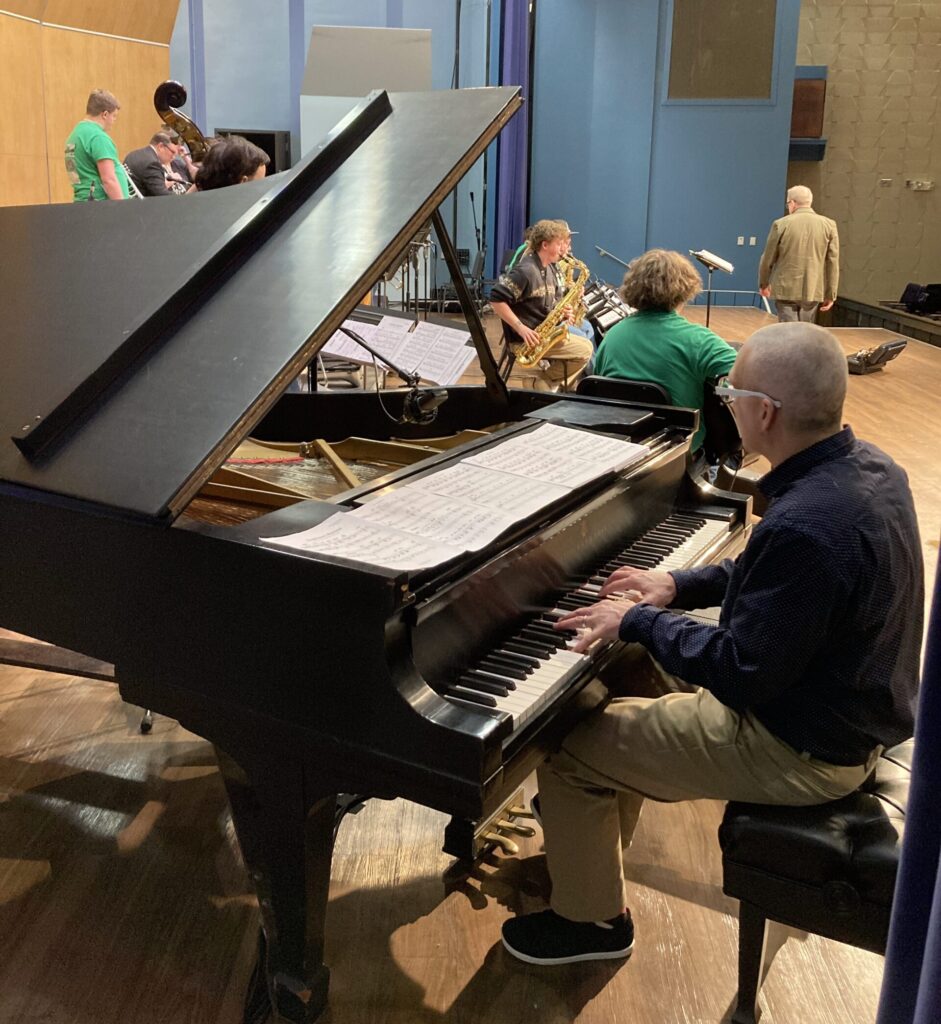
It’s written for band directors, classroom teachers, and mentors who want their students to experience jazz as a living practice—one grounded in listening, shared time, curiosity, and thoughtful risk‑taking.
This is not a method or a curriculum. It’s a growing collection of questions I’ve been asked in rehearsals, festivals, and quick hallway conversations, along with the responses that seemed most useful at the time.
You’ll find material aimed at different developmental levels. Some pieces were created for university courses; others came from working with younger or first‑time improvisers. The teaching approach is consistent, but the pacing and expectations shift with the setting.
The archive evolves over time. Pushback, questions, and alternative approaches are always welcome. If you write, please let me know whether I may share your comments and whether you prefer attribution or anonymity.
Start Here
If you’re new to this archive, choose the section that best matches the students you’re working with:
- For undergraduate or advanced high school musicians: Start with Introductory Jazz Improvisation. Designed for university settings, this course treats improvisation as a cumulative discipline—integrating theory, ear training, transcription, and performance within a structured semester-long framework.
- For younger or first‑time improvisers: Explore Learning to Improvise, a long‑form series on helping beginners build confidence, pace themselves, and take their first musical risks.
- For big band directors: Jump to the Big Band section below for setup tips, repertoire ideas, and listening suggestions.
- For combo or rhythm‑section coaches: See Combo Coaching and Rhythm Section Techniques.
- For long‑term musicianship and personal formation: Begin with Practice as Long‑Term Formation and Orientation & Listening.
Entering Improvisation
Improvisation isn’t just about information. Students mainly need a way into listening, decision‑making, and risk that feels doable and grounded in real music.
The resources below come from different teaching contexts, but the central questions remain the same: How do we help students start improvising without overwhelm or fear?
- Introductory Jazz Improvisation (A structured university‑level course with embedded instruction and sequencing.)
- Learning to Improvise (A reflective series on working with young beginners in a small ensemble setting.)
- What is the protocol for kids who want to “sit in” with local groups?
Big Band
- What is the most conventional big band seating arrangement? Are there right and wrong ways to set up a big band?
- What guidelines should be used when selecting jazz ensemble repertoire?
- Recommended big band charts for high school ensembles
- Big band albums worth playing for students
Combo Coaching
- Working with Limited or Non‑Standard Combo Instrumentation
- Middle School Jazz Combo (Rehearsal notes and materials from a peer‑based ensemble.)
Composition & Arranging
Jazz Piano

- Jazz piano books for classical and mixed‑background teachers
- Building Theoretical Fluency as an Aural Musician
- Online resources for teaching jazz piano techniques
Practice as Long‑Term Formation
- What would I practice if I were 15 again?
- Why transcribe jazz solos?
- How to get better at transcribing
Rhythm Section Techniques
- Balancing guitar and piano in a student rhythm section
- Choosing between acoustic and electric bass
- How do I prevent a rock guitarist from ruining my jazz band? (just kidding)
Orientation & Listening
This page isn’t exhaustive, and it isn’t neutral. It reflects my own experiences, values, and blind spots.
Jazz education—like jazz itself—carries the weight of history, power, exclusion, and possibility. Ignoring that doesn’t make it disappear.
If these resources help you teach with more clarity, courage, or care, then they’re doing their job.