Jazz Arranging 2: Big Band Arranging
In this second semester of jazz arranging, we will focus on arranging and orchestrating for a traditional 17-piece big band: 4 trumpets, 3 tenor trombones, 1 bass trombone, 2 alto saxophones, 2 tenor saxophones, 1 baritone saxophone (no woodwind doubles), piano, guitar, bass, and drums. The course includes one major arranging project, broken into progressive sections, along with preparatory assignments and listening/analysis exercises. Your selection, drawn from the standard jazz repertoire, must be approved by the instructor.
You will write in a straightforward manner, following the style of Count Basie’s arrangers (Sammy Nestico, Frank Foster, Neal Hefti, Ernie Wilkins, Thad Jones, etc.) This course emphasizes mastering the craft of big band arranging, with a focus on strong fundamentals and effective voicings. The objective is to develop the skills necessary to confidently accept and complete commissions where the traditional big band sound is appropriate and expected.
Course Outline and Class Schedule
Semester: Spring 2025
Course #: MUSI 3632 (two credits)
Required Prerequisite Course: MUSI 3631, Jazz Arranging 1
Instructor: Earl MacDonald, Professor of Music, Director of Jazz Studies
Class Meeting Times: Mondays & Wednesdays, 9:05 – 9:55 AM, MUSB 109
Office Hours: Mondays, 10AM and by appointment
Suggested Textbooks:
The following big band arranging texts are on reserve in the Music Library. 3-hour loan period.
-
- Inside The Score (a detailed analysis of 8 classic jazz ensemble charts)
by Rayburn Wright. Kendor Music. - Instrumental Jazz Arranging
by Mike Tomaro and John Wilson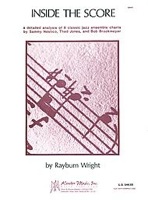
- Basics In Jazz Arranging
by Paris Rutherford - Introduction to Big Band Arranging
by Paris Rutherford - The Contemporary Arranger
by Don Sebesky - Changes Over Time: The Evolution of Jazz Arranging
by Fred Sturm
- Inside The Score (a detailed analysis of 8 classic jazz ensemble charts)
Additional titles and resources: https://www.earlmacdonald.com/jazz-arranging-text-books/
Suggested listening: classic big band album links & playlists
Communication policy:
E-mail is the instructor’s preferred method of communication with students. Please allow 48 hours for replies. When requesting a meeting outside of office hours, students should submit several meeting time options. The instructor prefers to be addressed as Professor MacDonald.
Grading:
The major project will be divided into manageable, constituent formal units. To support timely and successful completion of the big band arranging project, a series of smaller, weighted deadlines will be instituted. Each of the following components will contribute to a percentage of your final grade:
- ten listening/analysis assignments (2% each) – 20%
These are due at the beginning of Wednesday’s classes. Visit the following link for a list of suggested big band albums. Students are welcome to borrow scores from the jazz ensemble library. Start with the pieces in Rayburn Wright’s “Inside the Score.”
- formal planning – 10%
- preparatory assignments – 10% (throughout the semester)
- head statement(s) – 10%
- soli: 16 measures (1/2 chorus) minimum – 10%
- shout: 16 measures (1/2 chorus) minimum – 10%
- solo(s) with backgrounds – 10%
- intro/ending – 10%
- realization – 10%
Assignment Marking Policies:
The following policies apply to all assignments unless otherwise indicated:
- All assignments are due by the beginning of class on their assigned date.
- Comments and detailed markup will not be provided for assignments submitted late or for those granted an extension. However, a completed rubric with a breakdown of scores will be included to explain the grade received. Students are encouraged to manage their time effectively to ensure timely submissions.
- Extensions may be granted under certain circumstances. While feedback will not be provided for extended deadlines, marks will not be penalized, and a score breakdown will be included in the rubric.
- Unexcused late assignments will incur a penalty of 1 point per day (equivalent to one percentage point of the total course grade). Students with extenuating circumstances, such as hospitalization, should notify the instructor to discuss individual accommodations.
- Revisions are encouraged after receiving feedback. Provided the original deadline was met and a good-faith effort was demonstrated, grades may be adjusted to reflect improvements.
- A mid-semester progress report will be emailed to students.
- No assignments or revisions will be accepted after the last day of Spring Semester classes, May 1.
- There will be no final exam for this course.
- The course content and schedule are subject to change at the discretion of the instructor, with any updates communicated promptly to students.
For clarification or further explanation of these policies, please contact the instructor at earl.macdonald@uconn.edu.
Grading Scale:
| Grade | Letter Grade | GPA |
| 93-100 | A | 4.0 |
| 90-92 | A- | 3.7 |
| 87-89 | B+ | 3.3 |
| 83-86 | B | 3.0 |
| 80-82 | B- | 2.7 |
| 77-79 | C+ | 2.3 |
| 73-76 | C | 2.0 |
| 70-72 | C- | 1.7 |
| 67-69 | D+ | 1.3 |
| 63-66 | D | 1.0 |
| 60-62 | D- | 0.7 |
| <60 | F | 0.0 |
Schedule:
[View horizontally on a phone.]
While each class will include a review of previous material, only the new topics for that day are shown to avoid redundancy. Assignments will appear only on the days they are given and due (Wednesdays), though they may require work over several weeks. Be sure to check the rightmost column for test and due dates to stay on track.
| Week | Content | Assignments | Tests/Due Dates |
| Week 1 W 1/21 |
• orientation: “big picture” semester overview, textbook & resources. • project management • formal delineations, planning & road maps. |
• project and band assessment (PDF, MS-Word) • listening/analysis assignments (PDF, MS-Word) • select the piece you will arrange — no ballads; no original compositions • review: idea generation lists |
None |
| Week 2 M 1/26, W 1/28 |
Video: • David Berger • sketch scores (145%, 11 X 17) • formal planning • rootless tbn voicings • density & dynamic contour charts: – Basie Straight-Ahead – Hay Burner – Three & One |
• Reading: road maps • density & orchestration plans (due 2/11) —10%. Outline each 8-bar section, noting orchestration, texture, and density. Identify solis, solos, backgrounds, shout sections, transitions, intro, and ending. Highlight the apex, and consider feel changes or modulations. Use a contour chart (à la Rayburn Wright) or a narrative format. Distinguish in/out heads with unique treatments, avoiding codas or DS markings. • Worksheet: trombone voicings (due 2/4) • listening/analysis assignment #2 |
Due 1/28 @9AM: • listening/analysis assign #1 (2%) • piece, rhythmic feel(s) and tempo chosen. • written project and band assessment completed |
| Week 3 M 2/2, W 2/4 |
• Fourths voicings
• orchestrational choices |
• Worksheet: 4ths voicings (due 2/11) • lead line sketches for: in-head and out-head (due 2/18). Using copies of the provided score paper, write the lead lines and rhythm section parts for the in and out-heads of your chart. If including ensemble “hits” and backgrounds, write the top, melodic line only. Do not yet harmonize the horns. |
Due 2/4 @ 9AM: • listening/analysis assign #2 (2%) • submit lead sheet of chosen song • list of 10 recorded versions of your selected piece, with (YouTube) links. • rootless tbn section voicings • draft of road map/formal delineations for feedback |
| Week 4 M 2/9, W 2/11 |
Ensemble Voicings Overview: • 4-part block writing • Basie 4-part • Combination Voicings • Basic Ensemble • Upper Extension triads • range considerations: optimal lead line ranges • lower interval limits |
preparatory worksheets (due 2/18): • 4-part block, isolated chords: #1, #2 • Big Band ensemble voicings |
Due 2/11 @ 9AM: • listening/analysis assign #3 (2%) • road map (with density & orchestration plan) – 10% worksheets: • 4ths voicings |
| Week 5 M 2/16, W 2/18 |
• 4-part block writing, continued: harmonizing non-chord tones within passages | • melody statements (in & out heads) scored: harmonized, orchestrated. Due 2/25. • 4-part block worksheet:#3. Due 2/26. |
Due 2/18 @ 9AM: • listening/analysis assign #4 (2%) • lead line sketches for: in & out-head • preparatory worksheets: A. 4-part block, isolated chords: #1, #2 B. Big Band ensemble voicings *Mid-semester progress reports issued |
| Week 6 M 2/23, W 2/25 |
• soli lines — melodic line writing • 4-part block writing, continued • rhythm section integration • chorale writing |
• Sketch your soli line, considering range and instrumental limitations. Due 3/4 • 4-part block worksheet:#4 |
Due 2/25 @ 9AMl: • listening/analysis assign #5 (2%) • 4-part block worksheet:#3 • melody statements – in & out heads scored: harmonized, orchestrated (10%) |
| Week 7 M 3/2, W 3/4 |
• soli line feedback • motivic and rhythmic development • chorale writing • soli line feedback/consultations |
• Beautiful Love chorale-style Due March 3/11. • harmonize soli (due 3/11) |
Due 3/4 @ 9AM: • listening/analysis assign #6 (2%) • sketched soli line • 4-part block worksheet:#4 |
| Week 8 M 3/9, W 3/11 |
• soli harmonization • feedback/consultations • “shout choruses:” principles & examples |
• Shout chorus lead line (due 3/25) | Due 3/11 @ 9AM: • listening/analysis assign #7 (2%) • Beautiful Love chorale-style head arrangement • harmonized soli (10%) |
| Spring Break Mar 14 – 22 |
– |
– | – |
| Week 9 M 3/23, W 3/25 |
• feedback/consultations • writing drum parts • backgrounds: “solo enhancements” |
• harmonize shout chorus (due 4/1) • solo & BG sections (due 4/8) |
Due 3/25 @ 9AM: • listening/analysis assign #8 (2%) • shout chorus lead line |
| Week 10 M 30/30, W 4/1 |
• consultations: backgrounds • transitional material |
Due 4/1 @ 9AM: • listening/analysis assign #9 (2%) • harmonized shout chorus (10%) |
|
| Week 11 M 4/6, W 4/8 |
• Introductions and Endings — principles, examples, consultations | • Intro and Ending (due 4/16) | Due 4/8 @ 9AM: • listening/analysis assign #10 (2%) • solo and background sections (10%) |
| Week 12 M 4/13, W 4/15 |
• PDF: Music Preparation Fundamentals for Jazz Composers & Arrangers, by Darcy James Argue • music notation software guidance • articulation markings & dynamic schemes • part formatting • consultations, guidance • advanced reharmonization |
• computer note entry. • Creation and formatting of score and parts |
Due 4/15 @ 9AM: • Intro & Ending (10%) |
| Week 13 M 4/20, W 4/22 |
• proofreading | • Part taping • Scanning of parts • Highlighting roadmap instructions (D.S., etc.) |
Due 4/22 @ 9AM: |
| Week 14 M 4/27, W 4/29 |
• evaluative, critical listening to recordings of student arrangements | Reading sessions with the UConn Jazz Ensemble: 4/28 and 4/30. 2PM in von der Mehden Recital Hall. (10%) |

Important Note: This online jazz arranging syllabus and class schedule are dynamic, evolving, and regularly updated documents. Students are advised to check them frequently for the latest information.
Attendance:
Except for final examinations, the instructor has final authority in permitting students to submit assignments late or make up examinations.
Copyright:
My lectures, notes, handouts, and displays are protected by state common law and federal copyright law. They are my own original expression and I’ve recorded them prior or during my lecture in order to ensure that I obtain copyright protection. Students are authorized to take notes in my class; however, this authorization extends only to making one set of notes for your own personal use and no other use. I will inform you as to whether you are authorized to record my lectures at the beginning of each semester. If you are so authorized to record my lectures, you may not copy this recording or any other material, provide copies of either to anyone else, or make a commercial use of them without prior permission from me.
Academic and Conduct Policies for Students:
⇒ https://provost.uconn.edu/syllabi-references/
This page provides students with centralized access to policies related to academic integrity, conduct, discrimination and harassment, attendance, and accommodations, offering clarity on the standards that shape their classroom experience.
Some useful telephone numbers:
- Counseling and Mental Health Services: 860-486-4705 (after hours: 860-486-3427) www.cmhs.uconn.edu
- National Suicide Prevention Lifeline: http://suicidepreventionlifeline.org/ Dial 988.
- Alcohol and Other Drug Services: 860-486-9431 www.aod.uconn.edu
- Dean of Students Office: 860-486-3426 https://dos.uconn.edu/
- Career Services: 860-486-3013 www.career.uconn.edu
- Center for Students with Disabilities: 860-468-2020 http://csd.uconn.edu/